


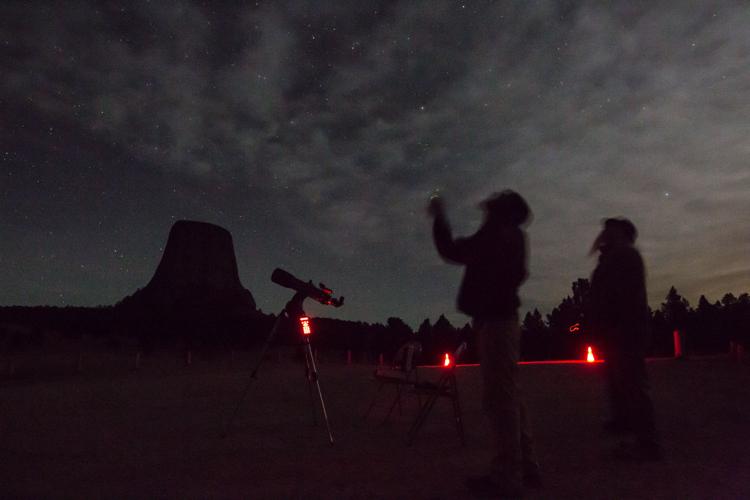
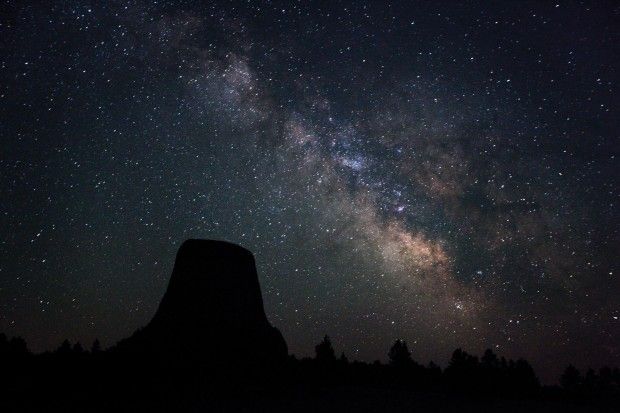
Barrett Flynn stood beneath a starry sky on a chilly night at Devils Tower National Monument, the glow from his green laser pointer the only unnatural light in this secluded part of Wyoming.
“Once you get to the Big Dipper,” he said, aiming his green laser toward the famous group of stars, “it’s a lot easier to get to other constellations.”
Flynn was educating on this November night. He’s leading a stargazing program at Devils Tower, this one scheduled around the yearly Leonids meteor shower.
As he detailed the Greek mythology and Lakota Star Knowledge narrations behind the sprinkle of stars, fireballs sporadically shot across sky.
“It’s just stories,” Flynn, 24, said of the constellations. “Once you know a story, it’s easy to stick in your mind.”
People are also reading…
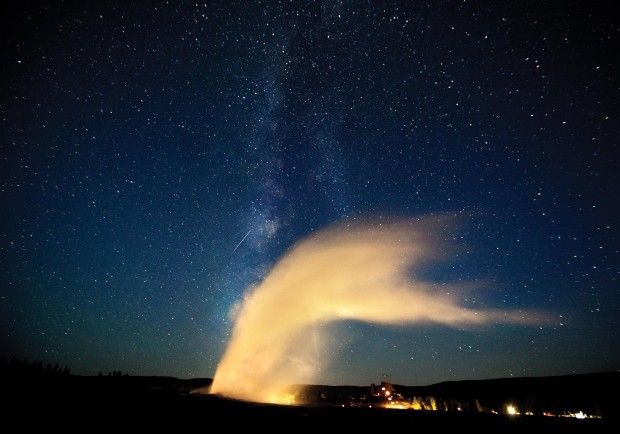
If it weren’t for the starry Wyoming sky, Flynn wouldn’t be here. The Boston native is new to astronomy. Back in June, the recent geology graduate completed a road trip across the West, and while visiting Yellowstone, was struck after one sunset when a different form of light brightened the sky.
“I remember specifically laying down at our campsite in the backcountry, and seeing part of the Wyoming sky and just being in awe,” Flynn said. “Seeing everything.”
Months later, a job opened at Devils Tower, and Flynn applied. He’s not alone with his infatuation for the stars in Wyoming. With little light pollution and easy access to the outdoors, the Cowboy State is one of the best states in the country for stargazing, attracting people such as Flynn and keeping people like Alan Corey.
Corey is the president of the Central Wyoming Astronomical Society in Casper, running programs and events throughout the year.
“We’re just a group of people that like to look up at the sky,” Corey, 36, said.
Corey has a special telescope designed to look at the sun, and another for nighttime observation. Corey is from Wyoming, though he spent a fair amount of time growing up in San Francisco.
“So I know what it’s like for people who are bathed in 24-hour light,” he said. “It can be kind of depressing, I think, for people who’ve never seen what the night sky really is. “
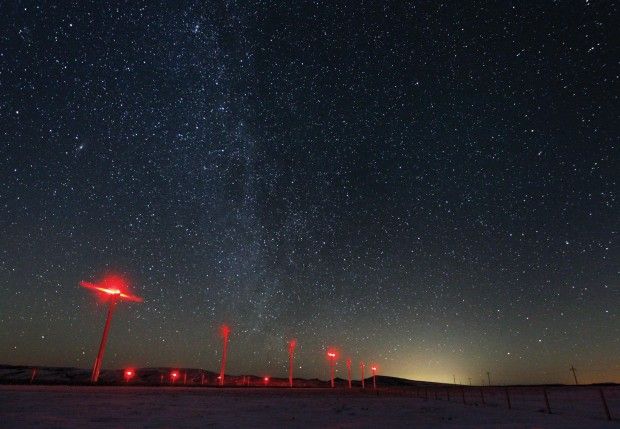
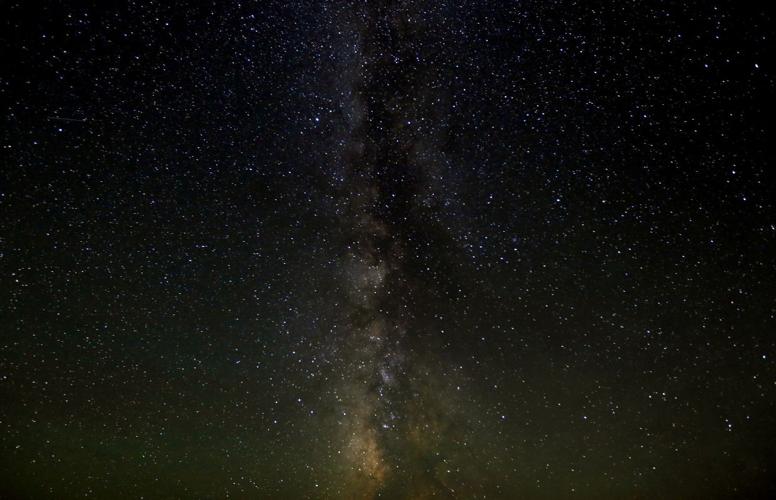
Stargazing is one of the major advantages of living in the least populated state in the country. Less people means minimal light pollution, but that’s not the only aspect adding to Wyoming’s stunning night sky. The weather is also favorable, Corey said.
Observatories near large bodies of water deal with overcast skies more frequently. In Wyoming, the relatively dry air, high altitude and lack of water are to the stars’ advantage.
“(The stars) here are unparalleled on the East Coast,” Flynn said.
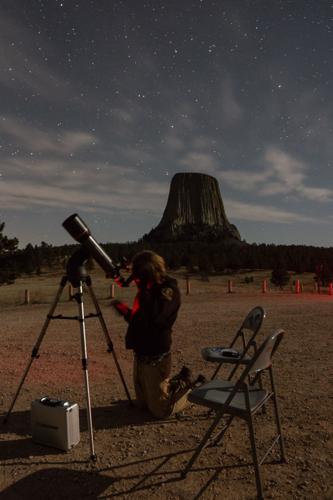
And because of it, Devils Tower premiered a program this year focused on the distinctive Wyoming night sky. They’re called star parties, and Flynn is in charge of leading and organizing each occasion. From October through December, Flynn hosted eight events, ranging from meteor showers to guided super-moon walks to telescope viewings.
The free events have drawn groups of all ages, as large as 30 people and as small as three. They’ve been such a success that Nancy Stimson, the chief of interpretation and education at Devils Tower National Monument, said Devils Tower plans on extending the stargazing events to the winter, spring and summer months.
“It’s education about the stars,” Stimson said. “It’s also about the Lakota Star Knowledge, which is a different type of curriculum. The Lakota have their own stories about stars and astronomy, so we try to tell that Lakota Star Knowledge and the Devils Tower natural history along with the astronomy.”
Flynn has enjoyed learning it all. Just a year ago, he never could’ve predicted he’d land at Devils Tower to learn more about astronomy. He’s been in Wyoming for a few months now, and has spent half of those nights under the stars, studying the sky and the constellations.
“I love it here. If I didn’t have (that night in Yellowstone), I’d probably be like, ‘Devils Tower? Where is that? Why do I want to go there, middle of nowhere Wyoming?’” Flynn said. “But I had a cool experience in the state, and I saw what the sky offered.”
Observatories and planetariums are spread across Wyoming, as are groups and clubs with high-powered telescopes similar to Corey’s. But unlike major metropolitan cities, seeing the stars in Wyoming is easy.
“Stargazing is one of the few activities in today’s economies that’s truly free, and to be honest, one of the most desirable things I think a lot of people can do,” Corey said.
“They just need to go out there and experience it.”


