


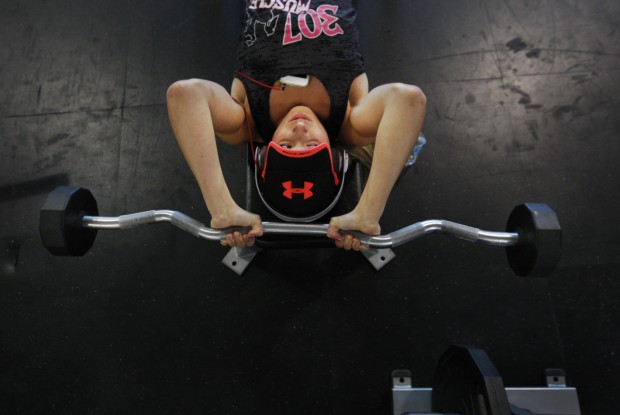
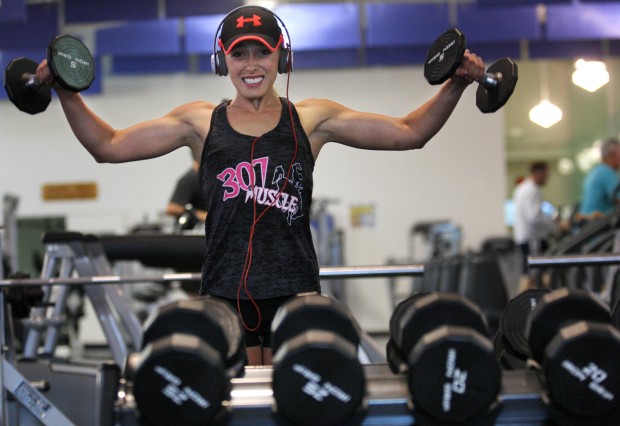
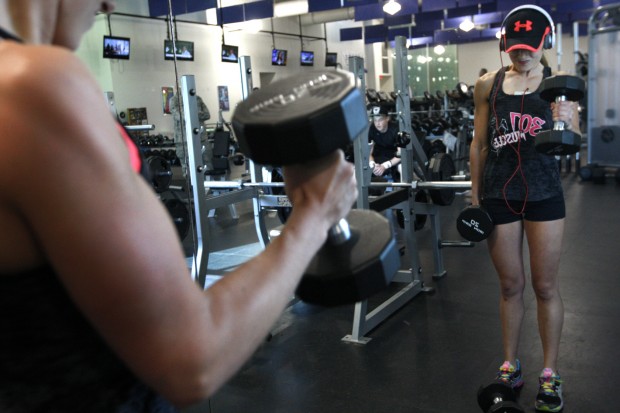
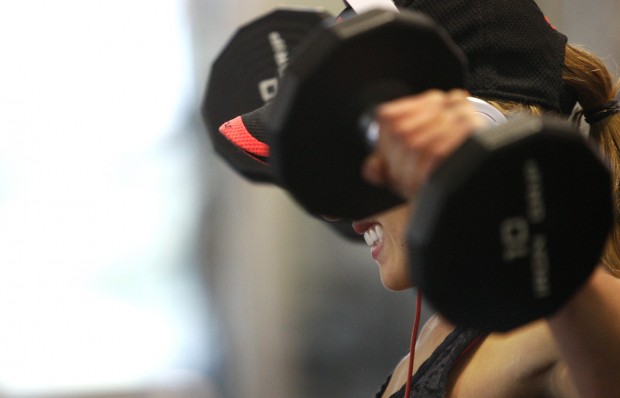
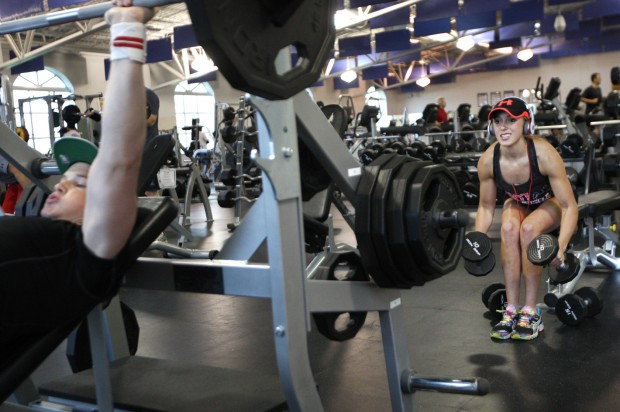
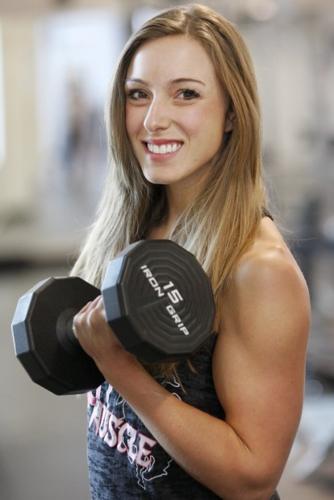
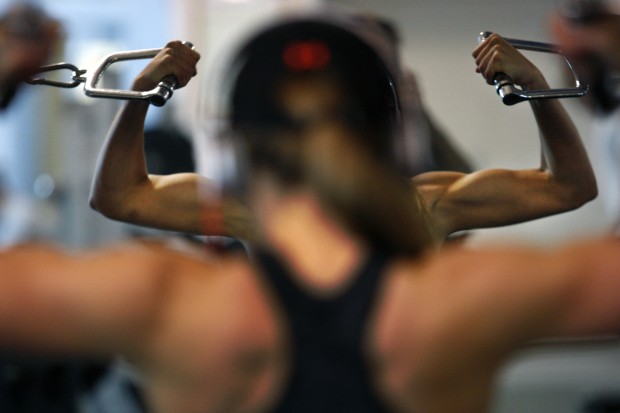
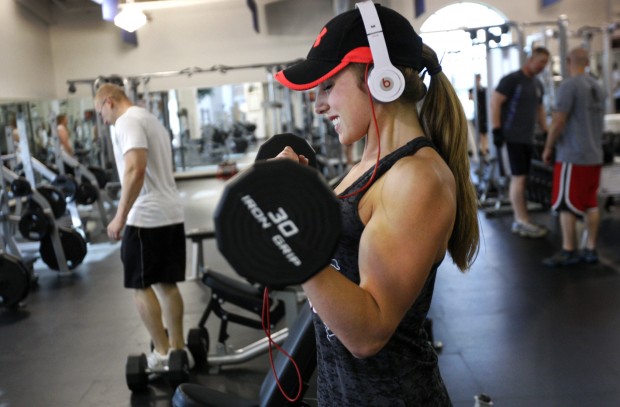
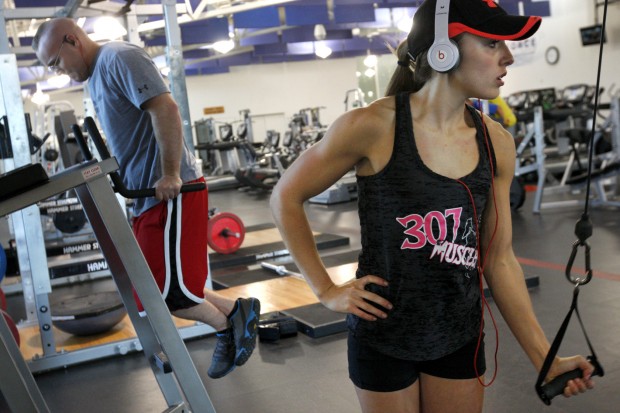
Kierston Mills doesn’t go out as often as her classmates.
The 19-year-old University of Wyoming student needs to be well-rested for her early-morning workouts.
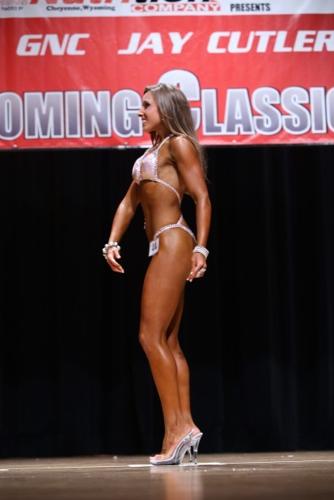
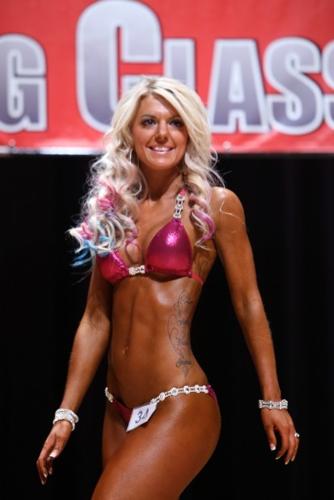
She competed in her third bodybuilding competition Aug. 10. She competed in the figure category and placed first in novice division and third in the open division at the Nutrition Company Bodybuilding Competition at Cheyenne Civic Center. It was the first bodybuilding competition held in Wyoming in more than 10 years.
Mills was one of 15 female competitors.
”I think it’s a way to make them feel good and accomplish goals that they have set for themselves in their lives,” said Hanna Imbrogna, a certified nutrition and wellness consultant with Nutrition Company in Cheyenne.
HISTORY
People are also reading…
Prior to the 1970s, there were few women in bodybuilding. The first large, women’s bodybuilding contest — Ms. Olympia — was held in 1980. It launched a boom in women’s bodybuilding, but interest began to wane in the 1990s.
”What was happening was that women’s bodybuilding was going to the extreme, because the girls were getting bigger and bigger,” said Rick Kasten, Wyoming’s district chairman for the National Physique Committee, the largest amateur bodybuilding organization in the country.
Many women were not interested in getting that big, so contest organizers added new categories to bodybuilding competitions in the mid-to-late 1990s. For women, that meant less bulk and more bikinis. Today, women can compete in four categories from least to most muscle tone: bikini, figure, physique and bodybuilding. There is also a fitness category, in which competitors perform a 90-second routine. There are fewer entries in bodybuilding, and the bikini category is the most popular.
Like most women, Mills first competed in the bikini category.
She started lifting weights her senior year of high school, and her boyfriend suggested she compete. She entered her first bikini competition at the age of 17. Since then, she ditched the boyfriend, but kept her newfound hobby.
”Ever since I switched into this lifestyle, I’ve completely fallen in love with it,” she said. “Competing in figure challenges me physically and mentally and gives me something to go after as far as a goal.”
HOW IT WORKS
Contestants in each category are broken down further by height depending on the number of contestants.
Judging is done in a closed event and there are typically five to nine judges.
Contestants in each category walk out onto a stage and pose or turn in front of the judges.
”Just to get up there on stage is an accomplishment in itself,” said Richard Seigelman of Kutz Promotions in Maryland, which put on the Cheyenne event.
The judges look for shape, symmetry, definition and muscularity — depending on the category — along with a feminine look.
The contestants in each category are ranked by each judge, such as first place, second place and so on.
The highest and the lowest scores are thrown out until there are five left. These scores are added up and the contestant with the lowest score places first.
The results are revealed during a second event that is open to the public so contestants’ friends and family members can cheer them on.
WHAT IT TAKES
It’s not uncommon for women to enter a bodybuilding competition to cap off their fitness or weight-loss goals.
Sierra Kramer, a 27-year-old woman from Cheyenne, started exercising two years ago.
”I’ve always been interested in fitness, but I just didn’t know where to start,” she said.
She entered her first bikini contest in January and placed third out of 24 in the novice division and fourth in the open division.
Bodybuilding has given her the structure and motivation she needs to keep at it.
It not only requires physical exertion, but time, money and dedication, too. Many bodybuilders work out one to two hours a day six days a week. It also requires diligent attention to nutrition. The cost of food can be high, and meal preparation takes time. Kramer prepares all of her food for the week on Sunday. In addition to food, there are also gym memberships, personal trainer fees (if desired), contest entry fees and beauty treatments for hair, makeup, nails and spray tans. Bikinis for the bikini competition can cost hundreds of dollars, Kramer said. Some competitors get sponsors to help with the costs.
The greatest challenge is not physical but mental, she said.
”Sometimes I feel like giving up, and then I just push through it and keep going,” Kramer said.
There’s one thing that both women say makes it all worth it: Results.
”It’s given me a booty. It’s given me curves. My body is more firm than it ever has been,” Mills said. “I’ve seen a crazy transformation, and I just want to keep going with it.”
Mills is also motivated by the fact that bodybuilding has given her something at which to excel. She played golf and ran track in high school, but didn’t excel at either. At the Nutrition Company Bodybuilding Competition in Cheyenne, she qualified to compete in a national competition. She plans to train intensely this winter to prepare for the NPC Junior National Bodybuilding Competition in Chicago in June.
GETTING STARTED
Weightlifting helps strengthen bones, aids in weight control, improves sleep and increases self confidence, according to the Centers for Disease Control.
Before you begin, check with your doctor.
Kasten suggests starting exercising three days a week: 45 minutes of weightlifting and 15 minutes of cardio.
Typically, a bodybuilder will work different areas of the body each day.
If you haven’t lifted weights before, hire a personal trainer to show you the ropes.
Also, be patient.
”You’re not gonna put on muscle over night,” Mills said. “You have to be consistent and work hard, and know that everything will work out in the end.”
Carol Seavey is editor of Live Well Wyoming magazine, which is published six times a year by the Casper Star-Tribune. Contact her at 307-266-0544 or carol.seavey@trib.com. Follow her on twitter at Carol_Seavey. Live Well Wyoming is on Facebook at www.facebook.com/LiveWellWyoming.


