


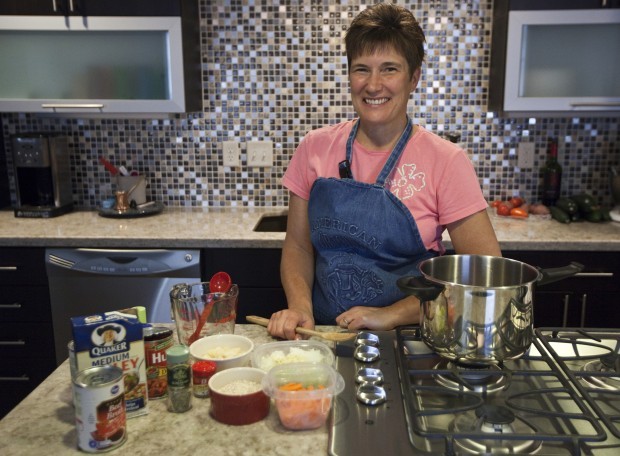
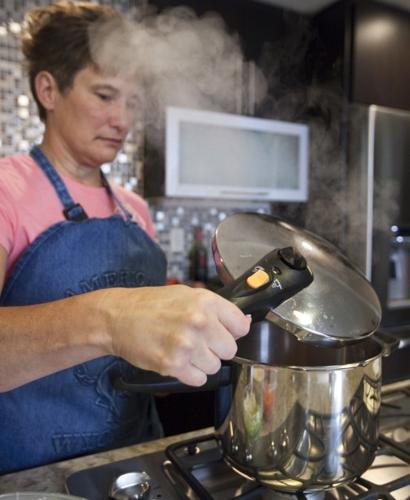
Tales of exploding pressure cookers once put fear in home cooks in search of a fast, easy way to put dinner on the table.
"They were these old, aluminum pressure cookers," said Merry Jane Walsh, owner of The Merry Peddler, a kitchen store in Casper. "There were no safety mechanisms. They were dangerous."
But the kitchen appliance that peaked in popularity in the 1970s is back and better than ever.
The latest models have additional safety mechanisms to prevent such explosions, making pressure cookers a safe, convenient kitchen tool.
Pressure cookers are stove-top pots with lids that seal in air and steam to create pressure, which cooks food quickly and evenly. Today's models are usually stainless steel and have lids that lock into place, pressure regulators and two pressure-relief valves, in case one fails.
People are also reading…
Those that are made for household use can hold four, six or eight quarts. Some 10-quart models are also designed to double as home canners.
Prices start at about $26 for a small, basic aluminum pressure cooker with a jiggly top and can rise above $200 for top of the line models. Electric pressure cookers are also available.
Pressure is measured in pounds of pressure per square inch or psi. Pressure cookers have one or two settings: high or low and high. The low setting usually cooks at eight psi and the high setting cooks at 13 to 15 psi.
Many people are drawn to pressure cookers because of convenience.
It takes 70 percent less time to cook food in a pressure cooker than regular cooking methods, according to Fagor, a pressure cooker manufacturer.
"In here, it's minutes versus hours," Walsh said.
The fast cooking time is also beneficial when cooking at high altitude, where water must boil longer to cook food. For example, in Casper -- which is 5,200 feet above sea level -- it takes about 15 percent longer to cook food than at sea level.
"It's almost a must-have at high altitude, because it shortens cooking time," said Karla Case, a registered dietitian with the University of Wyoming Extension Service in Natrona County.
There is also a nutritional advantage to pressure cooking, because it causes less nutrient loss than other cooking methods, Case added.
When food is boiled, many nutrients go down the drain with the water. Nutrients also break down when food is cooked for long periods of time, such as on a stove or in a slow cooker. In a pressure cooker, more nutrients are maintained because the food is cooked quickly and liquid is sealed in.
While pressure cookers are most popular for cooking foods that would take hours on the stove, such as soups and stews, a large variety of food can be cooked in them. With the help of accessories such as steam baskets and molds, pressure cooker are quite versatile.
"You can do everything from appetizers to desserts," Walsh said. "You can do casseroles, meat dishes, you can cook a chicken in here. Roasts are popular because it takes so long to do it. Lentils are a big thing, too."
Below, Walsh shares a one-pot recipe for beef and barley soup, which she adapted from www.food.com.
Pressure Cooker Beef Barley Vegetable Soup
Ingredients:
1 pound ground beef
1 14.5-ounce can diced tomatoes with green pepper, celery and onion
2 14-ounce cans beef broth
½ cup water
½ cup barley
2 stalks celery with leaves
1 large potato
1 medium onion
1 clove garlic
½ teaspoon dried basil
½ teaspoon dried thyme
½ teaspoon dried rosemary
1/4 teaspoon salt
pepper, too taste
Instructions:
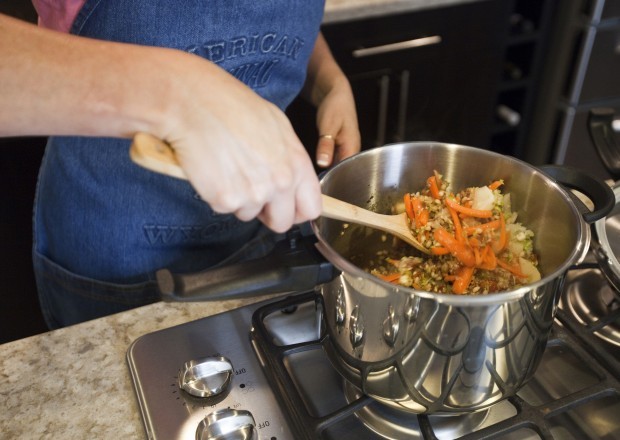
- Brown the beef in the pressure cooker and drain the fat.
- Add the tomatoes, one can of the broth and barley.
- Close the pressure cooker and bring to high (15 psi).
- Reduce the heat to stabilize the pressure, and cook for 10 minutes. During this time, prepare the vegetables: peel and cut the carrots into half-inch slices, peel and dice the potato and onion, and mince the garlic.
- After 10 minutes, release the pressure and open pot.
- Add vegetables, spices and water to the pot. If the stew seems dry, add some of the remaining broth.
- Close the pressure cooker and bring it to high pressure a second time, cooking the stew for 10 more minutes.
- Remove from heat and release pressure.
You can alter the consistency of the soup with the remaining broth, or for a different flavor add a 12-ounce can of V8 Juice. Serve with corn bread.
For more information on pressure cooking, such as instructions, cooking tips, recipes and product reviews, see www.hippressurecooking.com.
Carol Seavey is special sections editor at the Casper Star-Tribune. Contact her at 307-266-0544 or carol.seavey@trib.com. Follow her on twitter at Carol_Seavey.


