


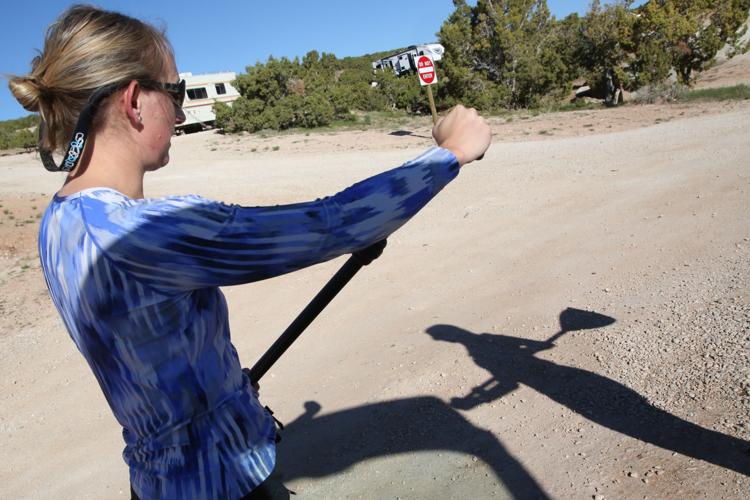
Bethany Cutts placed her paddle onto the 9-foot inflatable board on which she was floating and delicately lowered herself onto her hands and knees. She raised her rear in the air while carefully balancing on the gently moving water.
I mimicked her actions, knowing full well a downward-facing dog pose would be decidedly more difficult on a standup paddleboard than on land. One wrong move and I would go toppling into the frigid water. I gazed at the white and yellow design of my board as I lifted my heels up and down to stretch my calves. I’d never done floating yoga before.
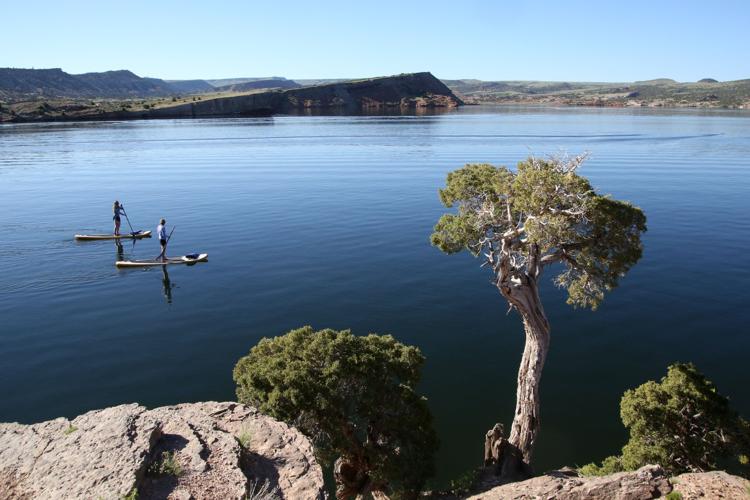
It was about 8 on a Sunday morning at Alcova Reservoir, a lake about 30 minutes west of Casper, and Okie Beach was already filling with campers. A shaggy black dog jumped from a nearby dock minutes earlier as Bethany and I scooted our boards onto the lake. The water, bright blue, stood in stark contrast to the red cliffs and green shrubs surrounding the lake. The air was already warm and soothed my bare legs.
People are also reading…
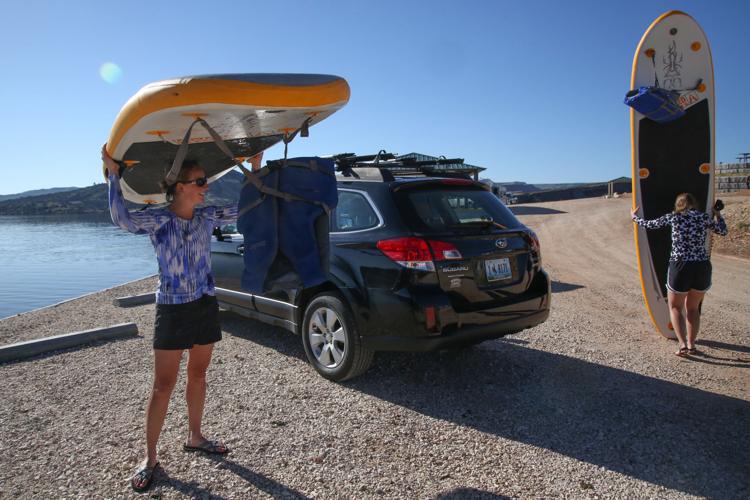
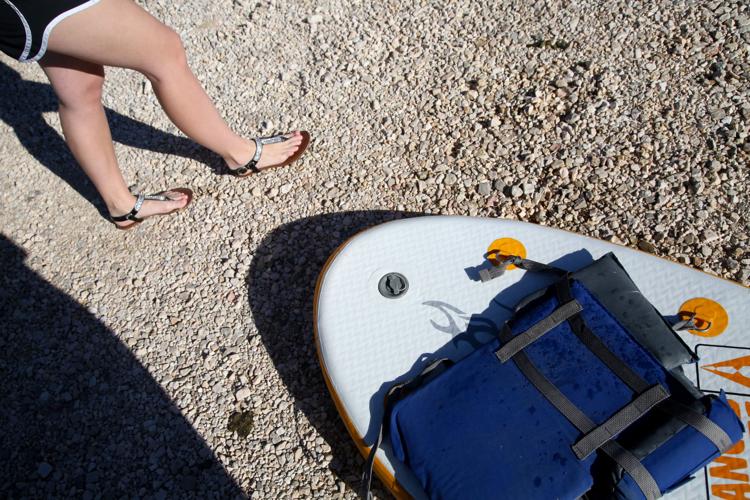
A fit 35-year-old, Bethany had an easier time carrying her board from her Subaru and to the shore of the lake than I did. I struggled to place my borrowed 25-pound board on my head as she had, but my biceps gave out and I dropped the board on the gravel ground. I tried again, this time resting it on the back of my head and neck.
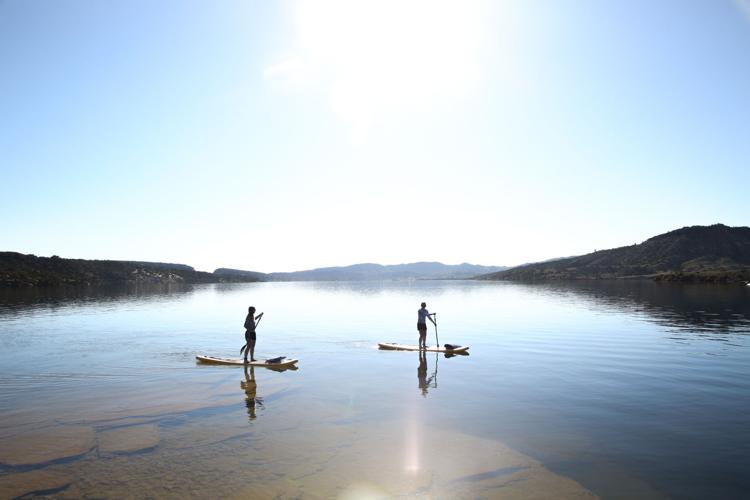
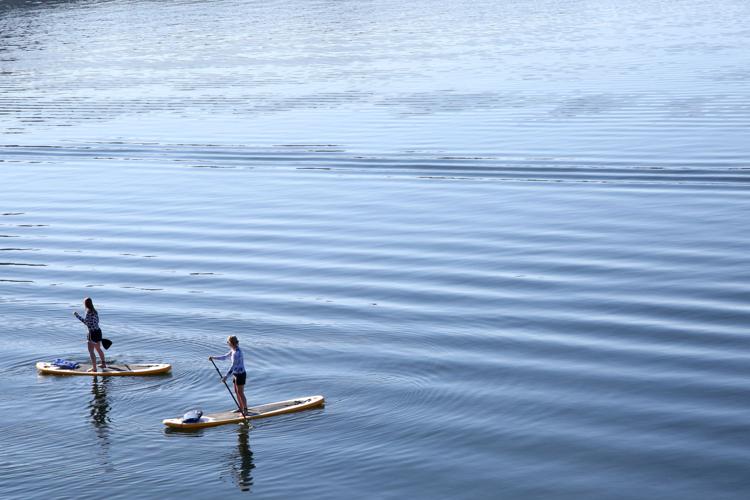
I copied Bethany and placed the board just off the shore before kneeling on it and paddling away from the rocks. I continued to do so until I felt confident enough to stand. Two jet skis zoomed past us as I stood and continued to paddle on both sides of my board. The inflatable board didn’t bend under my weight but I still worked to find my balance. Despite all the training I’ve done as a runner, my muscular legs shook. I bent my legs and tightened my core at Bethany’s direction and felt more secure in my stance as we casually paddled toward a small alcove away from the campground. Chilly water splashed on my feet as I moved, cooling me as I worked up a sweat.
Bethany and her husband were first introduced to standup paddleboarding while on vacation in Hawaii. While waiting for a surf lesson, the instructor suggested they take out a couple paddleboards. Bethany enjoyed the sport so much she purchased two inflatable boards from REI for her 30th birthday. She tries to take her board out at least once a week during the warm months, driving out to Alcova early in the morning before work and before the boats hit the lake. At first, she received strange looks from passersby who were uncertain about the boards. In the past two years she’s begun seeing other enthusiasts on the water.
She and her husband have also paddleboarded the North Platte River, following the water downstream but avoiding the white water park. They take their boards, which can be deflated and folded up, with them when they travel and have used them on the Deschutes River in Bend, Oregon, and on Lake Tahoe in California.
Ken Driscoll, owner of Utah’s Glide Paddleboards, the largest manufacturer of standup paddleboards in the country, said his biggest customer base is women in their 30s. He called the sport tranquil and said it’s a full-body workout.
“A total beginner can get on a board and within 15 minutes feel totally comfortable,” Driscoll said. “It’s probably one of the most accessible sports that you can get into.”
The sport has become popular in the last decade, but it’s been within the past few years that its gained traction in Wyoming. Today, the Rocky Mountain region constitutes about 30 percent of Glide’s business, Driscoll said. Glide ships about 500 boards to Wyoming a season.
“It kind of brings surf culture and surf fashion from the coasts inland,” Driscoll said. “I think surf culture has always been very popular and mainstream. The idea of being able to be on a giant surfboard in the water is a cool factor.”
Driscoll first began paddleboarding after breaking his back. He was a professional kayaker but after his injury it hurt to sit in a kayak. He wanted to get back on the water and now he takes his board to white water parks, such as the artificial wave in Evanston, and enjoys exploring waterways.
“Anybody, no matter where they live … can jump on one and get that feeling of being in the ocean,” Driscoll said.
Luke Keil, owner of 307 River Sports in Casper, said standup paddleboards allow users to venture into alcoves, like the one Bethany and I paddled into, that could not otherwise be reached.
“You can be closer to wildlife and see stuff that you wouldn’t see if you’re not paddleboarding,” Keil said.
Back at Alcova, Bethany and I encountered a rowboat with two fishermen as we headed out of the alcove where she’d given me a yoga lesson. We stopped to ask if the fish were biting as a motorboat sped past us, careful not to get tangled in their fishing lines.
A walleye swam in the blue water under us as we continued toward a dock to pull our boards out of the water. My arms were fatigued from our hour on the reservoir but my mind felt at ease, calmed by the gentleness of the water and the beauty around me.
Beginner tips
For beginners, start with a short and fat paddleboard for a more stable experience.
Start with a lake, such as Alcova or Glendo, before paddleboarding the North Platte River.
Start by walking the board into knee-deep water, then kneel on the board and take a few strokes in the water. Once you feel comfortable, stand up.
Don’t try to paddleboard over the white water park in Casper.
What you need
A standup paddleboard. Try renting one first. If you choose to buy one, boards range from about $300 to $3,000 depending on the retailer.
Paddle
Leash to attach leg to board
Life jacket
If you try white water waves, wear a helmet.
Where to Rent Boards
307 River Sports: $40 for a half day, $55 for a full day
Alcova Lakeside Marina: $35 for a half day, $60 for a full day


