


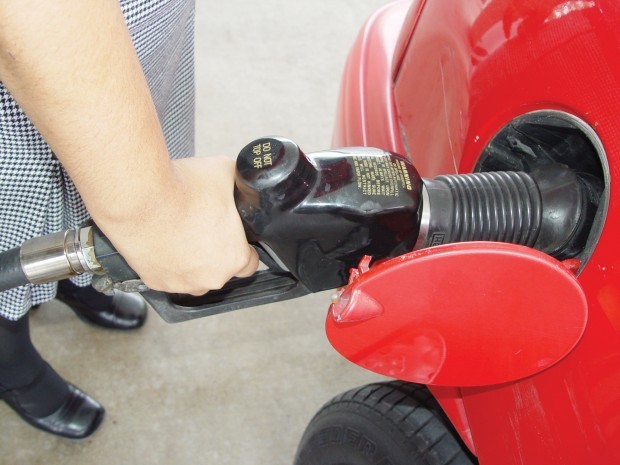
It doesn't make sense to drive miles out of your way to save pennies on a gallon of gas or diesel, but sometimes a little extra effort pays off.
We're looking forward to another summer of high fuel costs and, in many cases, people are unrealistic about the actual impact gas price variation from station to station has on their budgets.
As an example, assume you're filling a 19-gallon tank (for a full-size car) at $3.40 per gallon. That's $64.60. If you spotted gas 3 cents cheaper somewhere else in town, you'd save 57 cents. If you filled up once a week in the course of a year, you'd save $29.64.
If your vehicle gets 25 miles per gallon while you pay $3.37 per gallon then the cost of the gas per mile is 7.4 cents. You could afford to travel no further than about 7.7 miles out of your way to get the gas and still save money. But this is just for the gas; depreciation, taxes and insurance are more. If you include all the costs, we might be talking 50 cents a mile. The gas station would have to be no more than a couple blocks away to make saving 57 cents per tank worth it.
People are also reading…
So the way I see it, look for the cheapest gas and buy it whenever you are near the station, but don't go out of your way for it. Saving $30 a year is nothing to shrug at, but don't drive all around town looking for it. I love to save money, but personally, if I'm driving in an unfamiliar town and don't I see a price difference of more than about 10 cents, then I won't go to the trouble (and the risk) of crossing traffic to turn around and go back to save a bit on one tank of gas.
The big money with saving on gasoline and diesel has to do with what kind of vehicle you operate in the first place, if you're driving at all. Selecting a vehicle has its own set of complicated factors, and while mileage and other operating costs are factors, they may not be the most important ones.
Many folks traded their fuel-guzzling vehicles for more efficient vehicles in the last burst of high oil prices, and others changed their habits to drive less. These are obvious decisions that I'm sure a lot of people will be revisiting this summer. Beyond them, there are some other things we can do to ease pinch at the pump.
Gas card offers
When weighing gas card programs, look at the big financial picture. If it is a rebate for signing up for a credit card, when do you get your money back? With credit cards, you have to be careful of late fees and high interest rates. Other factors to consider include how much you shop at a specific store and how conveniently located the station is.
Making the grade
Some people are tempted to put premium gas in their car. Unless the manufacturer of your car specifies premium fuel, you are wasting money. A higher octane rating means that the gas will burn at a higher temperature, not provide more power or better mileage. Your car will perform best when you use what is recommended by the maker.
Driving Habits
The way we operate our cars is a large part of how much fuel we burn. It takes far more energy to accelerate a vehicle to a given speed than it does to maintain that speed. In town, we do a lot of stopping and starting, so the mileage is lower. But even on the highway, driving at a steady rate will improve mileage. And driving fast uses more fuel. I think I heard somewhere that cars get the best mileage somewhere around 55 miles an hour.
Here are some other driving tips which I picked up from AAA:
• When pulling away from a traffic light or stop sign, accelerate gently. The harder you work your engine, the more fuel it will consume.
• Keep your tires fully inflated. Low tire pressure means low fuel efficiency.
• Tighten your gas cap to prevent gas from evaporating from the tank.
• Clean the junk out of your trunk. Weight is the enemy of gas mileage.
• Don't start your car until you're ready to leave. Idling for just two minutes uses enough gas to drive for two miles.
• Use the air conditioning only when needed. Air conditioning greatly reduces your fuel economy.
• Shop for gas by price not brand. All brands must meet the same government regulations.


