


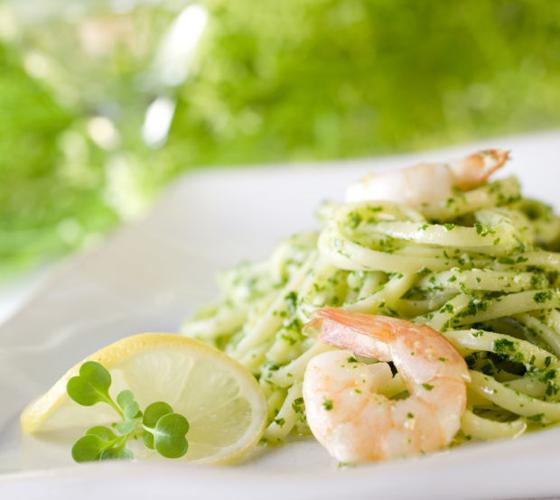
This is the time of the year when fresh herbs and vegetables are at their best, and we look for flavorful but lighter meals.
Pesto is an uncooked sauce originating in Genoa in northern Italy and traditionally consists of crushed garlic, basil, and pine nuts blended with olive oil and Parmesan cheese. The French version, pistou, is made of basil, parsley, garlic and olive oil and is used in soups and stews. The Eastern Europeans do a parsley, walnut and bread soaked in milk and then garlic and olive oil to which they sometimes add tuna for a really rich pasta sauce.
Modern sauces use different mixtures using the same principals, and are still called pesto. I have used sun dried tomato, garlic, almond, parsley and Parmesan cheese with the addition of some crushed red pepper flakes according to taste or goat cheese, walnuts and cilantro.
As long as the quantities of each ingredient remain constant, the sauce mixture can be what you have at hand. Not only can you mix and match the ingredients, you can also use the sauce in a variety of ways. You can use it on pasta with the addition of shrimp, pork, chicken, vegetables or nothing else at all. The same mixture can be used on steamed rice, on top of baked potatoes, or can be thinned with some lemon juice and extra oil to make a salad dressing, for greens, pasta, rice, quinoa, smeared on Pizza bases or even a potato salad. It is a flavorful addition to a vegetable or minestrone soup. Once made you can store it in the freezer in ice blocks so you have a ready made fresh looking sauce straight from the freezer when you have company. Once made, heat gently with other ingredients or it will clot with the cheese and not remain smooth.
People are also reading…
Traditionally, pesto is made with a pestle and mortar and all ingredients bar cheese are pounded together and the cheese is added last; however, modern food processors can take all the ingredients at once and the result is very similar.
The basic recipe is as follows, but once you have mastered the technique feel free to innovate and see what you have in your storage cupboard to make mixtures that please you and your budget.
BASIC PESTO
Ingredients:
1 tightly packed cup of basil
1 garlic clove peeled
¼ cup pine nuts, lightly toasted
¼ cup extra-virgin olive oil
salt to taste
squeeze of lemon juice
½ cup Parmesan cheese
Instructions:
- Over medium high heat, toast nuts until fragrant (3-5 minutes).
- In a food processor, combine the basil, nuts and garlic.
- Pulse while drizzling in the olive oil.
- Remove mixture from processor and stir in salt, lemon juice and cheese, to taste.
Use it on rice, potatoes, pasta (hot or cold), or freeze for future use.
Substitutions/additions:
* use cilantro, parsley, mint or arugula in place of basil
* use walnuts or almonds or even pistachios in place of pine nuts
* use sun dried tomatoes, cannellini beans, broccoli in place of cheese and/or oil
* add some chili flakes or freshly ground pepper for a bit of heat
Edamame Pesto
1 cup cooked edamame, shelled
1 cup cilantro
½ cup basil
juice from ½ lime
4 small cloves of garlic
2 tablespoons olive oil
2 tablespoons toasted sesame oil.
Instructions:
- Process all ingredients until desired consistency is reached. Add a little water if mixture is too thick.
Oil-free Basil Pesto
1 cup packed basil leaves
1 garlic clove
1 15-ounce can navy/cannellini beans
1 tablespoon water
2 tablespoons nutritional yeast
3 tablespoons fresh lemon juice
½ teaspoon kosher salt
olive oil to taste, if you prefer
Instructions:
- Process garlic clove then add other ingredients and process until smooth.
Broccoli Pesto
Make this pest without cheese for vegans or add pecorino cheese, to taste.
2 cups broccoli
2 stems fresh basil, parsley or sage
½ lemon, juiced
½ cup hazelnuts or almonds (Roasted garbanzos work if you are allergic to nuts.)
2 cloves garlic
½ cup olive oil
2 tablespoons water
salt and pepper
Instructions:
- Throw all ingredients in a blender.
- Pulse for about a minute. Add more olive oil or water if it feels too dry.
- Add salt and pepper, to taste.
- Serve with pasta, in a salad, on a sandwich or in a wrap.
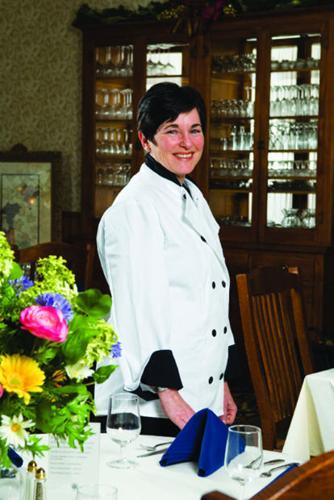
Susan Havers is owner and chef of the historic Elk Mountain Hotel. She has a diploma in cuisine and pastry from l'Ecole de Cordon Bleu in Paris. For more information, see www.elkmountainhotel.com.


