
Although rabbit has fallen out of favor recently, it is a good change from chicken or pork. In medieval times, rabbits were imported to England from China and were raised for meat by the lords and ladies of the land. If a peasant was apprehended with a rabbit, it could be a hanging offense.
Now, of course, if you live in rural areas rabbits can be found and killed for the pot. If your rabbit is wild, then perhaps it would be advisable to marinade the cut-up rabbit overnight in white wine with onions, celery, carrots, leaks, garlic, thyme and bay leaves. You could also add four peppercorns. When ready to cook, drain the rabbit, pick out the meat and keep the vegetables and the marinade to one side. Proceed as below. This recipe would also be good with pork or chicken.
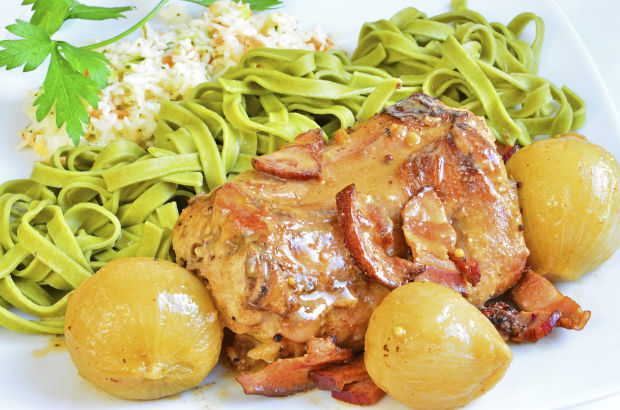
Rabbit in a Mustard Sauce
People are also reading…
serves six
Ingredients:
1 rabbit (about three pounds)
3 ounces Dijon mustard
2 cups of white wine
1 sprig of thyme
1 bay leaf
1 cup of finely diced onions, celery, carrots and leaks
1 cup sour cream
parsley, chopped
1 clove of garlic, chopped
1 tablespoon butter
Instructions:
1. Dice up the vegetables until they are really small, as this will intensify the flavor of the sauce.
2. Clean the rabbit and keep the heart, liver and kidneys for the sauce. Cut the thighs in two and cut off the lower legs. Then, cut off the front legs. Cut the body in half lengthwise and again crosswise, so that you have a number of largely equal pieces. Cut off any dry bits.
3. Heat a deep skillet or Dutch oven and cover the bottom with oil.
4. Dust the rabbit with seasoned flour and cook it in the oil until the surfaces are nicely colored. Then add the liver etc. Remove all of the meat from the pan and set it aside.
5. Add the vegetables and cook at a moderate heat until they are colored and caramelized. Add thyme, bay leaf and crushed garlic.
6. Paint the rabbit with the mustard on one side and place the clean surface back into the skillet on top of the vegetables.
7. Place the skillet in a hot oven (375 F) for five to 10 minutes until a crust forms. Then, pull it out of the oven and pour the white wine over it. Scrape the bottom of the pan a little and reduce it a bit on the stove top to remove the acidity. If the meat is still a little firm, add some broth, cover it and return it to the oven to cook until it is tender before continuing to step eight.
8. Add a little more mustard, cover it with buttered parchment paper and put it back in the oven for 20 to 30 minutes.
9. Remove it from the oven and remove the meat from the pan. Place it on a warm serving dish.
10. Add the sour cream, or sweet cream, if you prefer, and leave it to reduce until the sauce thickens.
11. Add some thyme, salt, pepper, the chopped garlic and a tablespoon of butter and stir it in. Take it off the stove and sieve the sauce.
12. Adjust the seasoning and add mustard to the sauce, if needed, and pour it over the meat.
13. Sprinkle it with chopped parsley and serve it with sautéed potatoes.
NOTE: To finish, I add a little whole grain mustard, because I like the look and texture.
Susan Havers is owner and chef of the historic Elk Mountain Hotel. She has a diploma in cuisine and pastry from l'Ecole de Cordon Bleu in Paris. For more information, see www.elkmountainhotel.com.