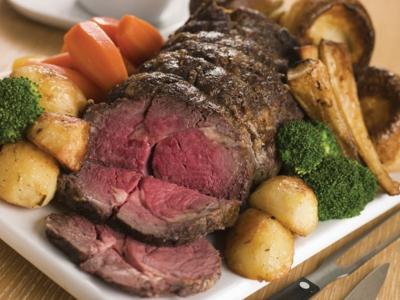

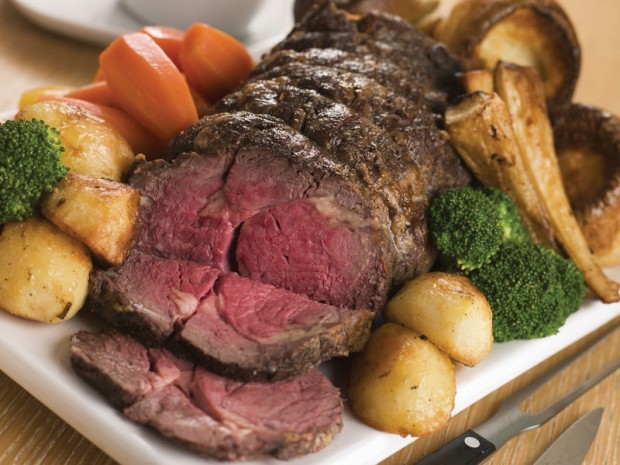
Modern chefs have come to the conclusion that slow roasting red meat in an oven set on low is the best way to get an evenly cooked, moist roast. Prime rib is the most forgiving cut of meat to roast, as it has some marbling and a fatty cap to help it self-baste. But both prime rib and cheaper cuts such as rump, round or top sirloin can benefit from this method. Lean meats, such as game, require special handling. (See the tips below.)
All roast meats benefit from being at room temperature prior to cooking. Depending on the size of the roast, take it out of the refrigerator one to two hours ahead of time.
Rib roast
- Set your oven to the highest temperature you can -- 450 to 500 degrees.
- Prepare the roast. (If you have time, you can do this the night before.) Cross hatch the covering fat, but do not cut into the meat. Liberally rub salt, pepper or the seasonings of your choice into the surface. Put the roast fat-side-up into a pan scattered with some chopped onion, carrots, celery, parsley sprigs and bay leaves and a sprinkling of salt and pepper. Add two cups of water, beef stock, beer or wine. The melting fat will bathe the entire roast in its juices and the liquid will help keep the meat moist. Once you remove the finished roast you can use the juices to make a sauce.
- First brown the meat on high then slow-cook it on low. Place the meat, uncovered, in a very hot oven for about 15 minutes so that the outside of the roast starts to caramelize and turn brown. Immediately turn the oven to the lowest temperature it can go – generally 175 to 200 degrees. Continue to cook it uncovered until the temperature in the thickest part of the meat reaches 110 degrees. It may take a 3- to 3.5-pound roast anywhere from two and half to three and a half hours to cook, depending on the thickness and desired doneness of the meat. Generally, you can allow about 25 to 40 minutes of cooking time per pound once it's been seared. But all ovens are different, and if the meat is flat and long rather than round and plump, it will cook quicker, so a meat thermometer will come in handy. It is better to undercook it than to overcook it at this point. Remove the meat from the oven when the thermometer reads 25 degrees less than the desired result, as the meat continues to cook for a while once it's removed from the oven. Rare is regarded to be 125 to 135 degrees, medium rare 135 to 145, and medium is 145 to 155. Once the meat reaches the desired internal temperature, remove it from the pan and cover it with foil to keep it warm.
- Finally, make the gravy. Skim the excess fat off the roasting pan, then put the pan on the stove top on medium heat. Add a tablespoon or two of flour and stir it with a wire whisk until the flour has thickened and the gravy is smooth. Then add about a cup of liquid -- such as water, milk, stock, cream or beer -- and bring it to a boil. Strain the resulting au jus into a jug and serve it with the meat.
People are also reading…
Lean meat
Lean meats, such as game, have little fat and require careful handling during the cooking process.
You will need to season the surface of the meat with some kind of fat -- such as lard, oil or butter -- in addition to seasonings. You can also make little cuts in the meat and insert slivers of garlic and thyme or rosemary twigs. (This is often done with lamb or elk.) Take it easy on the salt, as this toughens the surface fibers.
If the piece of meat is small enough, you can brown it in a skillet on the stove. To do so, heat the skillet and spray it with a little oil, then quickly brown the meat on all sides. Otherwise, do as above in a very hot oven for 15 minutes, then turn the oven right down. Place it in an oven preheated on low -- 175 degrees if possible -- with the same kind of vegetable base as for the rib roast. For game meat, I often add parsnips, juniper, sprigs of thyme, and I use red wine instead of other liquid to keep the roast moist.
Cook uncovered until the internal temperature reaches 110 degrees. For example, a 4-pound venison roast will take about four hours to cook in an oven set at a very low temperature.
Remove the roast from the pan and keep it warm while you make the gravy.
Cornstarch gravy
Cornstarch makes lighter gravy than regular flour and the method is a little different. To make gravy using cornstarch, add water, red wine or beef stock to the pan and loosen the drippings from the pan. (There may not be a great deal of drippings if the meat is rare and has little fat covering.) Place the pan on the stove top at medium heat. Dissolve a tablespoon of cornstarch in a little water or wine and add it to the pan. Stir quickly while the gravy thickens to avoid lumping. Add a little butter at the end and swirl it around, then strain gravy into a jug to serve with the meat.
Susan Havers is owner and chef of the historic Elk Mountain Hotel. She has a diploma in cuisine and pastry from l'Ecole de Cordon Bleu in Paris. For more information, see www.elkmountainhotel.com.