


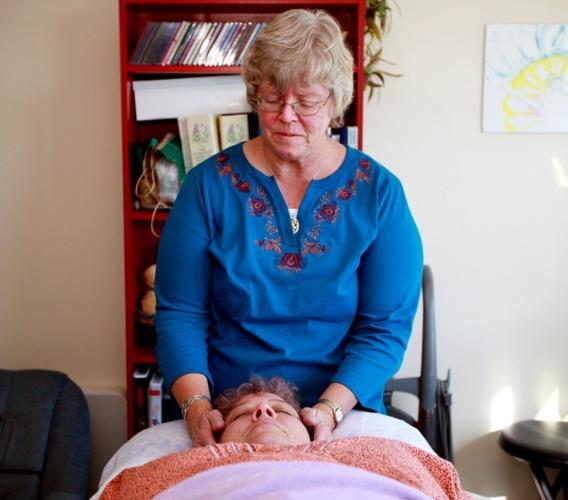
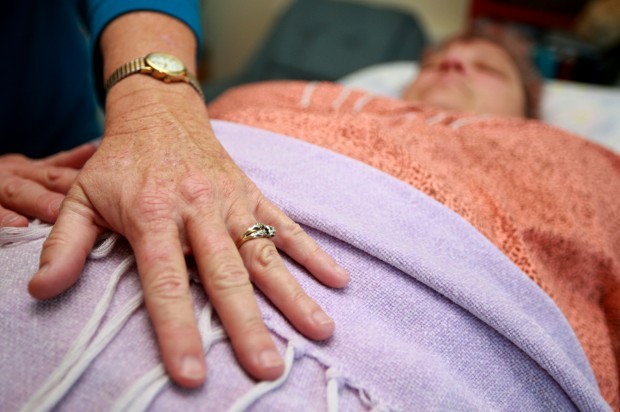
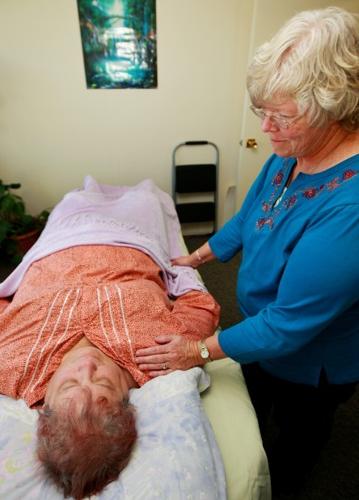
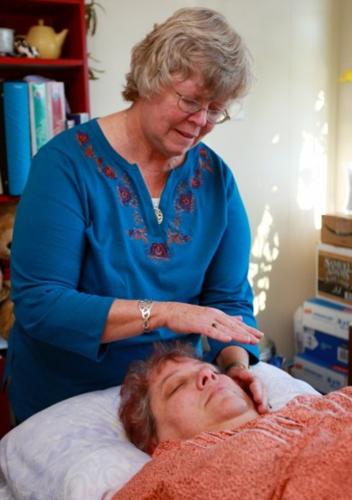
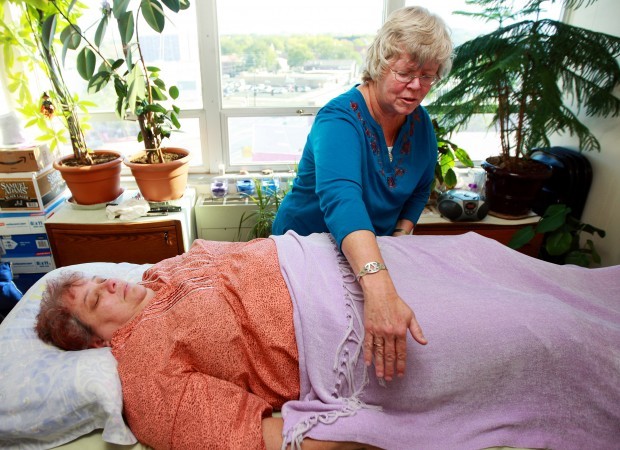
Carolyn Eitel lies on a massage table in an office in downtown Casper. Soft music plays over a boom box and candles burn on a table. Donna Annis places one hand on Eitel's shoulder and another hand on her wrist for a few moments before moving on to another area of the body.
"I get into that meditative state," Eitel said.
The 50-year-old Casper woman has Lupus, an autoimmune disease that damages the skin, joints and organs. For Eitel, it causes skin issues and joint pain, with flare-ups that limit her range of motion and are sometimes so painful that she can't sleep through the night.
Like many who suffer from chronic pain, she's found relief in complementary medicine. Once a month, she goes to Peace, Love and Reiki in Casper for a one-hour Reiki session. When the pain is bad, she goes twice a week.
"Lupus is something that doesn't go away, but you can live quite comfortably and Reiki helps me do that," Eitel said. "It's helped my pain level so much."
People are also reading…
Reiki is an energy technique which is used to reduce stress and promote healing. Trained practitioners administer it with their hands. Practitioners say it accelerates the body's natural ability to heal physical and emotional ailments.
Based on Japanese traditions, Reiki states that an invisible life force energy flows through the body on pathways. When these pathways are blocked, one's life force energy is reduced, causing illness or stress. When one's life force energy is high, it allows one to be happy and healthy. Blockages can affect one's physical, mental, emotional or spiritual wellness.
Donna Annis, owner of Peace, Love and Reiki in Casper, is a trained Reiki master and has been offering it since 1998.
"When you get stressed -- good stress, bad stress, it doesn't matter -- you can get blockages in your system," Annis said. "Reiki gently breaks those blockages, and when the blockage is released, your body can heal."
Reiki is administered by practitioners who are trained to channel God's energy. They administer this energy through their hands, either by placing their hands on or just above a person.
"It's not my energy -- it's God's energy," Annis said. "I'm like UPS."
Reiki is not a religion, and clients do not have to believe in it for it to work, Annis said. It's similar to other hands-on healing techniques in that a life force is administered through the hands. Unlike in other healing techniques, Reiki practitioners don't take on clients' karma and do not deplete their own life force energy, as the energy they channel is not their own.
"A lot of Reiki is listening to your intuitions," Annis said. "I've got angels working with me. I don't hear them, I don't see them. I just know."
Reiki was developed in the 1800s by a Japanese man named Mikao Usui. It was introduced to the west in the 1930s by a woman who lived in Hawaii and became popular on the mainland in the late 20th Century. Today, there are more than one million Reiki masters worldwide.
There are many different Reiki techniques and certifications. Practitioners are not required to be licensed.
Some people, like Eitel, get Reiki for chronic conditions. While Reiki does not affect medical treatment or medication, Annis recommends discussing treatment with your doctor.
Many others use it as a tool to relax.
"Most people have forgotten what it's like to totally and completely relax," Annis said.
A typical Reiki session lasts an hour. It's done fully clothes while lying on a massage table. The Reiki practitioner administers the energy with her hands. Touching is not necessary, but Annis says it provides a stronger connection.
Annis usually starts with a prayer, then hovers her hand over one's body to detect energy blockages, which sometimes make her hands tingle. When she feels a blockage in a particular area, she keeps her hands there, delivering God's energy to it. Clients may feel warmth when the blockage is released.
Oftentimes, people become so relaxed during Reiki that they fall asleep, she said.
If someone has a cold, and she puts her hand on their head, their nose will likely start to run.
"If you come in relax, breathe and let it flow through you, it's quite an experience," Eitel said. "It's definitely made my life better. I can do the things I want to do, like go on walks or hikes. It's a great gift to give yourself."
Carol Seavey is editor of Live Well Wyoming. Contact her at 307-266-0544 or carol.seavey@trib.com. Follow her on twitter at Carol_Seavey.


