


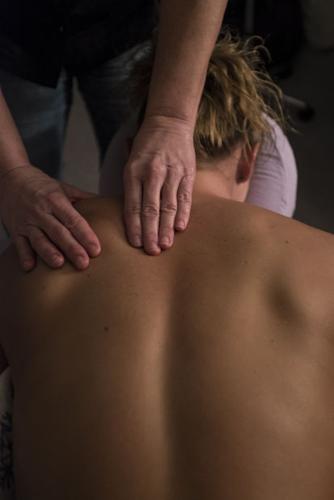
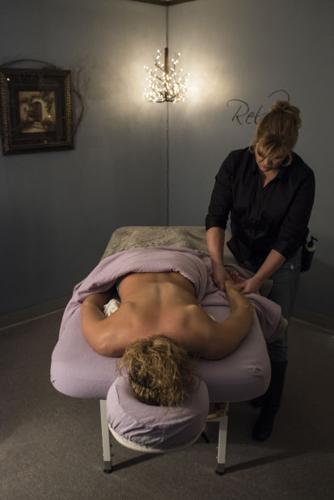
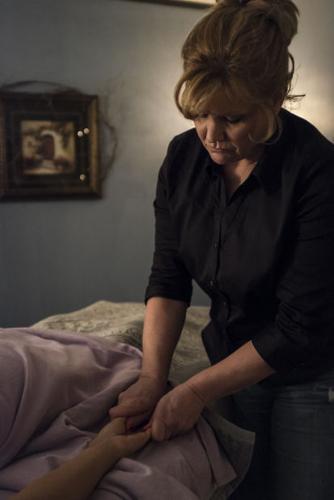
Flute music played softly over a boom box, and the sweet scent of potpourri filled the dimly lit room. A young woman was lying face down on a massage therapy table draped in a sheet. Susi Miller stood over the woman, reached for a bottle that was holstered to her hip and squirted lotion into her hand. Gently but strategically, Miller stroked the woman’s back with her forearm.
“Is the pressure OK?,” she asked.
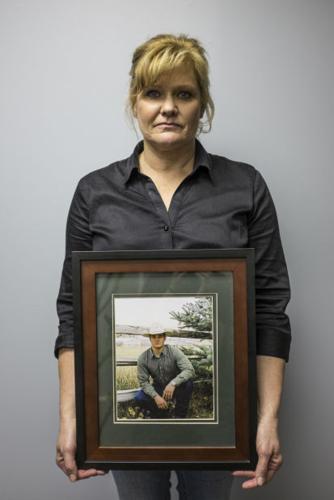
Until recently, Miller had only been on the receiving end of massage. The Casper woman had long enjoyed massage therapy. Once a month, she got one for some much-needed relaxation. After her son, Army Pvt. Scott Miller, died at the age of 20 in Iraq in 2007, those monthly appointments had an even more profound effect.
In her grief, she couldn’t eat or sleep and became anxious and depressed. With her emotions running wild, she quit working.
People are also reading…
“My life just kind of fell apart,” she said. “I just stayed home and tried to breathe.”
During her monthly massages, the tension and emotions were released and her tears flowed freely. There’s something about human touch, she says. She’d leave feeling refreshed, having escaped her anguish, if only for an hour.
Three years after her son died, Miller received her massage therapy certificate from the U.S. Career Institute in Fort Collins, Colo.
BENEFITS
Massage therapy is about more than relaxation, says Pat Collins, a member of the American Massage Therapy Association and licensed massage therapist in Johnson City, N.Y.
“People don’t realize that it can help people with things like fibromyalgia,” Collins said. “It sounds like massage is becoming more and more recognized as treatment in addition to relaxation, and I think we’re being more recognized in the medical community as alternative therapy.”
Massage therapy is the manual manipulation of the soft tissue of the body — such as muscle, connective tissue, tendons and ligaments — to promote well-being and health. It is a complementary and alternative medicine, which means that it is used in addition to or in place of traditional medicine. It’s often used to relieve pain, rehabilitate sports injuries, reduce stress, increase relaxation, address anxiety and depression, and aid general wellness, according to the National Center for Complementary and Alternative Medicine, a federal government agency that researches complementary and alternative medicine.
Although massage therapy has been around for thousands of years, the medical community didn’t pay it much attention until recently.
“I’ve heard a lot of people say they don’t understand what massage does, and that’s because there hadn’t been much research 30 years ago, 20 years ago or even 10 years ago,” said Diane Redman, director of the massage therapy program at Sheridan College.
Today, there are many promising studies on the benefits of massage. However, scientists aren’t certain what changes occur in the body during massage or whether it influences health, according to NCCAM.
Studies show that massage is an effective treatment for reducing stress, pain and muscle tension, according to the Mayo Clinic. It may also benefit the following conditions:
• anxiety digestive disorders
• fibromyalgia
• headaches
• insomnia related to stress
• myofascial pain syndrome
• paresthesias and nerve pain
• soft tissue strains or injuries
• sports injuries
• temporomandibular joint pain
Deborah Marsh, of Casper, receives massage therapy twice a week to help cope with the aches and pains associated with breast cancer. At stage four, it’s already spread to other parts of her body, but ongoing chemotherapy has made her a four-year survivor. She gets massages after each chemotherapy treatment.
“I had ungodly pain that would hit me, and I would get a massage and feel good the rest of the day,” she said. “It made one hell of a difference.”
Rocky Mountain Oncology in Casper, where Marsh is treated for cancer, offers patients one free massage therapy session. It helps reduce their anxiety, stress and pain, and improves digestion and energy, according to Reim Fehringer, a physical therapist at the oncology center.
“Patients will complain of chemo-brain,” she said. “So if you can enhance any alertness, it is helpful, and of course increasing blood flow helps.”
Increasing the circulation of blood and lymph in the body is a major benefit to massage therapy, according to Redman, but it also can be a risk.
RISKS
Those long, boring health forms one has to fill out before getting a massage are there for a reason. For those with a pre-existing condition, there can be risk to massage, especially if the massage therapist doesn’t know about it.
It’s rare, but massage can cause internal bleeding, nerve damage, temporary paralysis or allergic reactions due to lotions or oils, according to the Mayo Clinic.
Because massage affects circulation, those on blood thinners must be cautious.
“If you are working too deep, you could move the clot and cause an embolism,” Redman said.
Since it also stimulates lymph circulation, those at risk of lymphedema should inform their massage therapists.
Massage is not recommended for those who are sick or have a fever, rash, lesions, blisters or other skin growths, varicose veins — to an extent — and during the first trimester of pregnancy.
“You could, potentially, cause a miscarriage,” Redman said.
Inform your massage therapist of any new medical conditions. Depending on what it is, the massage therapist may be able to work around it or require a note from your doctor.
LICENSING
The state of Wyoming does not require a license to practice massage, a fact that the Wyoming chapter of the American Massage Therapy Association hopes to change.
“As a consumer, do you want to have someone who has training, or someone who went to a 100-hour program or someone who just hung a sign in their window?” said Redman, who also is a member of the AMTA.
While the cities of Cheyenne and Rock Springs have city ordinances regulating massage therapy, the AMTA will endorse legislation for state licensure for possible consideration by the state legislature in 2015.
Massage is available at spas, physical therapy offices, chiropractic offices or directly from a massage therapist. The customer typically lies on a special massage table unclothed and is covered with a sheet. Upper body-only massages may be done fully clothed while seated on a special massage chair. If you are uncomfortable without clothes, many massage therapists are flexible.
“Some people are uncomfortable taking off their clothes, and I will work through the sheets or over the clothes,” Collins said. “Whatever makes them more comfortable.”
Appointments are often available for 30 to 90 minutes. For relaxation or stress management, Collins recommends getting a massage once every three or four weeks. When treating specific conditions, consult your massage therapist to find out the frequency for the greatest benefit.
FIND A MASSAGE THERAPIST
To find a massage therapist, ask friends for recommendations or search www.findamassagetherapist.org, Collins suggests.
Before making an appointment with a massage therapist, find out what his or her qualifications are. Ask whether she is certified. If so, ask where she got the certificate and how long the program lasted. Also inquire about her length of practice.
COMMUNICATE
When it comes to massage, communication is a two-way street.
“The No. 1 complaint I hear from consumers of massage therapy is, ‘My massage therapist talks too much,’” Redman said.
It’s OK to tell her that you would really love to hear about her life, but need some quite time.
Massage therapists should ask whether the pressure is too much or too little. Keep your answers honest, and feel free to communicate your needs, even if she doesn’t ask.
It’s OK to try other massage therapists until you find the one that is right for you.
“Different strokes for different folks is really true,” Redman said. “There will be a time in your life when one person’s style really resonates with you. At 60, I can’t take the deep tissue I craved 30 years ago.”
Miller — the woman who went into massage after her son died in Iraq — opened Aspen Creek Massage in Casper last summer.
“Most people want to come in here just to relax — run away,” Miller said. “I just want them to feel better than when they came in.”
Carol Seavey is editor of Live Well Wyoming magazine, which is published six times a year by the Casper Star-Tribune. Contact her at 307-266-0544 or carol.seavey@trib.com. Follow her on twitter at Carol_Seavey. Live Well Wyoming is on Facebook at www.facebook.com/LiveWellWyoming.


