


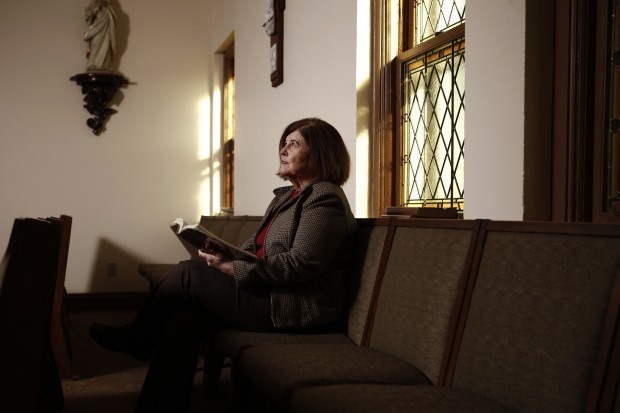
At Catholic nursing school, Flossie Vance started every day with Mass.
She never imagined that spirituality wouldn't be a part of nursing.
But for many nurses of faith, that's something that is missing from their everyday jobs.
"At a hospital or a doctor's office, it's oftentimes not appropriate to address peoples' spiritual needs," said Carol Peterson, curriculum coordinator for Wyoming Interfaith Health Ministries.
For a growing number of Wyoming nurses, faith community nursing fills that void. Faith community nursing, or parish nursing, is a specialty of nursing that focuses on helping patients to achieve health, healing and wholeness through health promotion and disease prevention. Since its inception in 2007, Wyoming Interfaith Health Ministries has trained more than 50 faith community nurses.
People are also reading…
"Being a parish nurse is being able to provide a holistic approach to the practice," said Natalie Stewart, a faith community nurse in Jackson. "We're multidimensional people. We are mind, body and spirit, and our spiritual life is integrated in our thinking and physical well being."
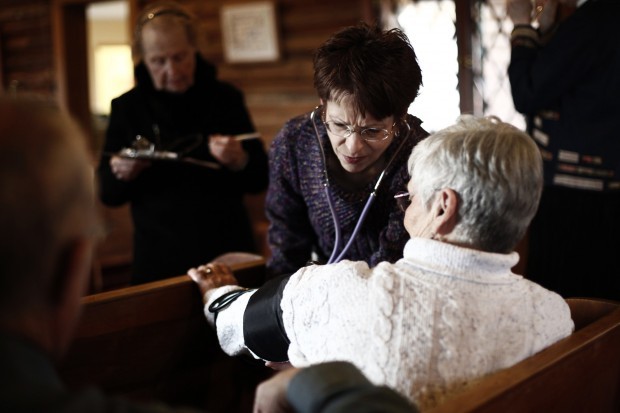
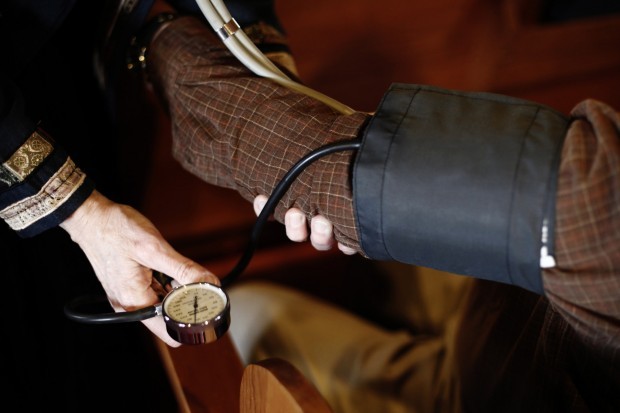
Faith community nurses serve their congregations and communities by providing referrals to health resources, leading classes on topics such as nutrition, fitness or bereavement, or just providing a listening ear. Some provide blood pressure checks after church services, write articles on current health topics for newsletters and bulletins or visit people.
HOW IT STARTED
Long before there were retirement homes, community clinics and private hospitals, religious organizations took care of the ill and elderly in their communities. But it wasn't until the 1980s when the model for modern faith community nursing was developed by a Lutheran chaplain named Granger Westberg.
He believed health care transcends physical care, because true healing involves the whole person in the context of their community.
"Nurses really understood this concept of body, mind and spirit, and it's important to add all of those areas because if some one is having a physical ailment, it affects them emotionally and spiritually," Peterson said. "Nurses just kind of got it."
Westberg developed a partnership between Lutheran General Hospital in Park Ridge, Ill., and six area congregations, with the intention of linking resources of the health care system to the faith community.
Westberg founded the International Parish Nurse Resource Center in 1986. The center helps nurses and communities explore ways to incorporate faith community nursing into their faith tradition. Since then, faith community nursing has become an international movement.
Having a nurse on the staff of a congregation provides a unique forum for health promotion and disease prevention, according to the organization's website. Members of a church, knowing that a nurse is available on an informal basis, can discuss a health concern with the nurse before it becomes a chronic or serious condition.
"It's one of the more creative ways for providing or helping people access some form of health care," said Lucy Williamson, executive director of Wyoming Health Council, a nonprofit which runs Wyoming Interfaith Health Ministries.
The Wyoming Health Council developed Wyoming Interfaith Health Ministries as a way to provide health care access to rural communities. It's a nondenominational program that provides education, networking and support to faith community nurses.
For the past two years, the program has operated and grown thanks to a $70,000 grant from Cheyenne Regional Medical Center. The grant allowed the hiring of a full-time employee and funded training and marketing efforts. During that time, the Wyoming Interfaith Health Ministries focused recruitment in Laramie County, in addition to the rest of the state.
"It'd be great to say there's at least one faith community nurse in every community in Wyoming," Peterson said. "If we can get these folks trained and provide this statewide network so they're not operating in isolation and have that networking and ongoing resources, we really believe it will benefit rural and frontier communities."
A NURSES' MINISTRY
For many nurses who are spiritual, faith community nursing just makes sense.
"I've always had a passion and desire to help people -- that's why I went into nursing -- and this is a great way to do that and combine my faith," said Ruth Manley, faith community nurse at Cody Bible Church. "For me, it's a way of giving back."
When they first start, they may do health assessments to tune into the needs of their congregations.
Faith community nurses offer services formally, such as workshops or classes, while others may be as informal as a chat after a church service.
"Faith Community nurses can be creative and do what they're comfortable with based on their skill set and the needs and desires of their faith communities, too," Peterson said.
For example, Becky Diberg, coordinator of health ministry at the Newman Center in Laramie, works mostly with young adults. She focuses on wellness and provides health information to students, many of whom are living away from home for the first time.
"When you're away, it's easy to fall into really bad habits with eating and exercising, and trying to strike that balance, especially when they're freshman, is a helpful thing for them," said Diberg, who is also graduate student in nursing education, nursing instructor and employed at a local nursing home.
She has offered classes on how to survive midterms, updates a bulletin board on current health topics monthly, gives referrals to local health resources and listens to students' concerns with a confidential ear.
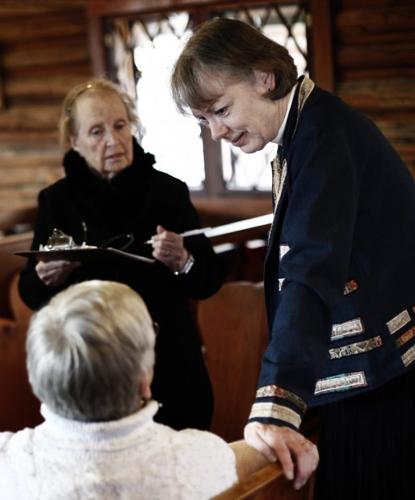
Rozella Rice, on the other hand, devotes most of her time to older adults. A nurse practitioner and faith community nurse at St. Paul's Lutheran Church in Cheyenne, Rice volunteered to visit people when her church went from two pastors to one.
Five or six times a week, she visits people, some from her church, and others who are not, in their homes and in hospitals. She listens to their concerns and offers encouragement. When there's an illness or hospitalization in a family, she's supports them through it. And when there's no one to advocate for them, she steps in to help.
"I think they help me as much as I help them," she said. "It's just a way of giving on what was given to me."
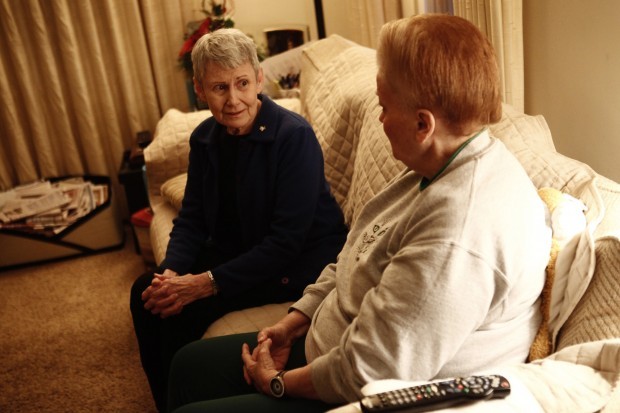
Rice visits Judith Randall, 72, about once a week. A retired nurse, Randall suffers from permanent vertigo. She doesn't drive and uses a walker when she goes out. Rice takes her to the retired school nurses' luncheons, and talks with her about medical issues, community happenings and faith.
"She connects me with the outside world more than I would have a chance to do on my own," Randall said.
Natalie Stewart, a faith community nurse in Jackson, also serves in creative ways. She started a mass of remembrance at Our Lady of the Mountains, a Roman Catholic church. She used to work in women's health, where she learned that, oftentimes, when women lose children through miscarriage, abortion or very early in life, they don't have a chance to grieve.
"They're real losses for people," Stewart said. "A lot of times people don't want to talk about it, but it doesn't mean that they don't feel or experience it. It's important to have that experience."
Held each year before Mother's Day, the mass gives women in the community a chance to celebrate, honor and grieve a life that wasn't.
Their ministry isn't limited to their congregations, though. Faith community nurses offer their services to their entire communities.
Flossie Vance, the nursing student who couldn't imagine nursing without faith, is now a family nurse practitioner and director of pastoral care health ministry at St. Mary's Cathedral in Cheyenne. One of the few paid faith community nurses in the state, she coordinates about 20 staff and volunteers in visiting those in need and providing health information to the people of St. Mary's, St. Joseph's and Holy Trinity. There are weekly health education articles in the bulletins, classes on parent leadership, bereavement and nutrition and exercise, biannual health fairs and many referrals.
"We have a real handle on what's available in the community, so we can refer them," Vance said. "A lot of the advice is helping them advocate the health care system. It's complicated, and they really need advocates."
The services aren't limited to Catholics.
"People call often who are not Catholic, and it doesn't matter," she said. "We want a healthy parish, but we also want a healthy community."
Carol Seavey is special sections editor at the Casper Star-Tribune. Contact her at 307-266-0544 or carol.seavey@trib.com. Follow her on twitter at Carol_Seavey.


